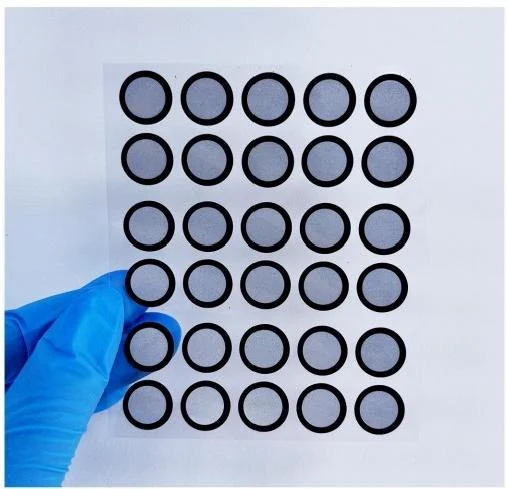
3D-scanning reference markers
Easy-to-recognize circular point markers for 3D scanning, photogrammetry, and spatial positioning.

3D-scanning reference markers
Reference markers for 3D scanning, photogrammetry, and large-workpiece alignment. Inner and outer diameter, surface, quantity, adhesive or magnetic mounting, and recognition requirements are confirmed by the scanner.
Start from the use case
Marker size, edge contrast, reflectance, and mounting directly affect software recognition. Workpiece surface, scanning distance, lens resolution, point spacing, and removal requirements should be considered together.
Request a quotePublished product directions
The product links below provide a concrete reference for the solution. Pattern, substrate, dimensions, accuracy, and delivery are confirmed per project.
Easy-to-recognize circular point markers for 3D scanning, photogrammetry, and spatial positioning.
Before you ask
A complete input list helps engineering review the plan quickly. Send what you already have; missing details can be confirmed during the enquiry.
Technical confirmation
Use lens resolution and scanning distance to set marker diameter, edge, and usable contrast.
Choose adhesive, matte, or magnetic mounting from curvature, oil, reflectance, temperature, and cleaning.
Use the scan path, stitching algorithm, and workpiece size to set spacing, quantity, and packing.
Record adhesive, protective film, batch labels, packaging, and removal requirements for delivery.
FAQ
No. Diameter must match scanning distance, lens resolution, and point spacing. A marker that is too large reduces the number of points per area; one that is too small may be unstable to recognize.
Yes, with the right mounting and surface treatment. Provide curvature, reflectance, scanning distance, and removal requirements before fixing the adhesive or magnetic format.
Yes. Quantity, grouping, batch labels, protective film, and packaging can be included in the delivery requirements.
Diameter, spacing, substrate, mounting, recognition requirements, and lead time are governed by the technical confirmation sheet.
We will confirm a workable plan based on the pattern, substrate, accuracy, and operating environment. All parameters are subject to the final technical confirmation sheet.
Analytics choice
Allow Google Analytics and Baidu Analytics to measure visits and improve the inquiry journey. Rejecting does not affect site features. Privacy policy