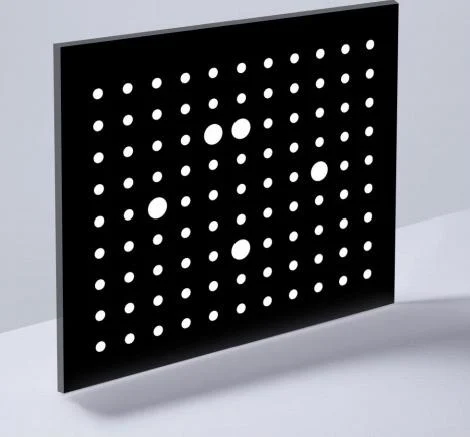
Stereo (binocular) calibration target
For synchronized two-camera calibration, helping correct lens distortion and determine the relative pose of a stereo system.

Stereo calibration targets
Custom targets for stereo cameras, 3D vision, and depth measurement. We confirm the pattern, dimensions, substrate, and mounting method against the shared field of view, working distance, and calibration algorithm.
Start from the use case
A stereo system must see the same feature points from both cameras in the same working space. Effective area, pattern density, flatness, and mounting should be confirmed together with the stereo baseline, lens, and working distance.
Request a quotePublished product directions
The product links below provide a concrete reference for the solution. Pattern, substrate, dimensions, accuracy, and delivery are confirmed per project.
For synchronized two-camera calibration, helping correct lens distortion and determine the relative pose of a stereo system.
Before you ask
A complete input list helps engineering review the plan quickly. Send what you already have; missing details can be confirmed during the enquiry.
Technical confirmation
Confirm the area visible to both cameras so the correspondence points are not available on only one side.
Choose checkerboard, circle grid, or coded marks, then fix the cell size or point spacing.
Select glass, ceramic, aluminum, or film from the flatness, lighting, cleaning, and fixture conditions.
Dimensions, accuracy, holes, quantity, packaging, and lead time are recorded before production.
FAQ
No. Size follows the shared field of view, working distance, and the number of features required by the algorithm. Confirm the common area first, then set the board size.
Either can work when it matches the existing calibration pipeline. Checkerboards offer mature corner detection; circle grids help when stable center fitting is important.
Yes. Send the outer profile, holes, datums, effective area, and mounting pose so the shape and support can be assessed against the equipment space.
Final dimensions, flatness, pattern accuracy, and lead time are governed by the technical confirmation sheet.
We will confirm a workable plan based on the pattern, substrate, accuracy, and operating environment. All parameters are subject to the final technical confirmation sheet.
Analytics choice
Allow Google Analytics and Baidu Analytics to measure visits and improve the inquiry journey. Rejecting does not affect site features. Privacy policy